
Lethal Means Safety
Creating Time, Space, and Support
Suicide prevention starts long before a crisis. Staying connected, talking openly about mental health, and planning ahead can help protect the people we care about.
Lethal means safety means creating time and distance between someone experiencing a suicidal crisis and potentially lethal methods. Because the urge to act often peaks quickly and then subsides, putting physical distance between a person in distress and a highly lethal method buys invaluable time for the crisis to pass and gives support a chance to arrive.
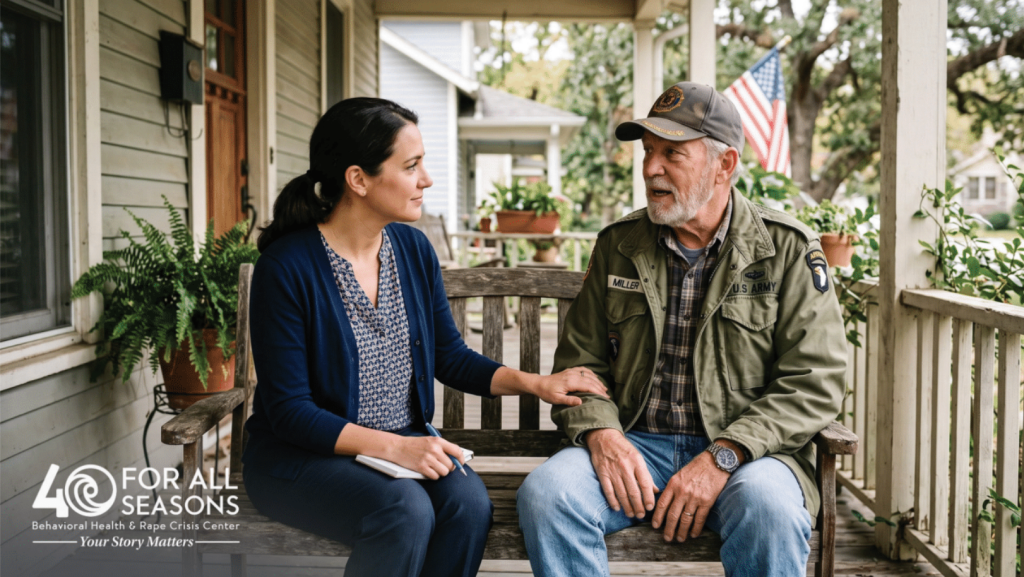
For many Eastern Shore families, responsible firearm ownership is an important tradition. Safe storage must remain central to the conversation. It is essential to how we care for ourselves, our families, and our communities, including our veterans and service members.
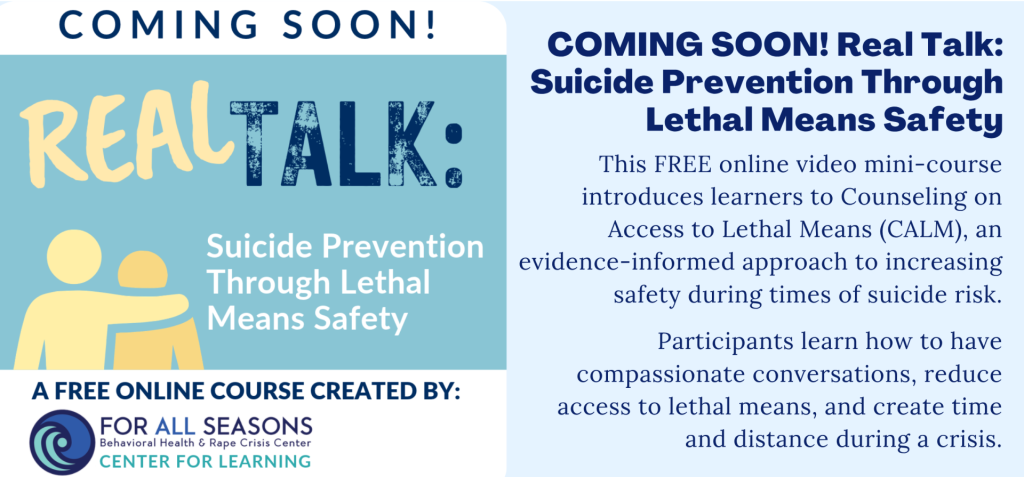
Explore how you can help make a difference in suicide prevention. For All Seasons' Center for Learning is offering Real Talk: Suicide Prevention Through Lethal Means Safety, a FREE, self-paced online course introducing Counseling on Access to Lethal Means (CALM), an evidence-informed approach to increasing safety during times of suicide risk. Learn more.
Simple Steps Can Make a Difference
Lethal means safety can include:
- Secure firearm storage: Use a gun safe, lockbox, or appropriate firearm lock.
- Separate storage: Store firearms unloaded and keep ammunition separate and secure.
- Plan ahead: Consider temporary changes to firearm access when someone is going through a difficult time.
- Talking openly: Discuss mental health and safety before a crisis occurs.
These conversations are not about judgment or blame. They are about planning ahead and protecting the people we love regardless of one’s mental health status.
Click HERE to learn more about Maryland Safe Storage Laws.
Click HERE to find temporary firearm storage options in Maryland.
Find Local Safety Materials
Mid Shore Behavioral Health can connect community members with gun locks and other harm reduction materials. Contact the organization for current availability and distribution information. Email Jacqualine Salb at jsalb@midshorebehavioralhealth.org
How to Start the Conversation
If you're worried a friend or loved one may be thinking about suicide, starting the conversation around lethal means safety can feel intimidating. You don't need to say everything perfectly. Showing you care, asking directly, and helping them find support can make a difference.
1. Start with care, not judgment.
Choose a quiet moment to check in. Let them know what you've noticed and that you're there to listen.
- “I've noticed you've had a lot on your mind. Do you want to talk about it?
- “I care about you. How have you really been doing?”
- “You don't have to go through this alone. I'm here to listen.”
2. Ask directly about suicide.
It's okay to use the word suicide. Asking someone if they're thinking about suicide does not make them suicidal or put the idea in their head. They may feel relieved that someone has opened the door to an honest conversation.
- “Have you been thinking about suicide?”
- “Have things gotten to a point where you're thinking about hurting yourself?”
- “Thank you for being honest with me. You can talk to me about what you're going through.”
Listen without judgment. You don't have to fix everything or immediately find the right words. Give them room to talk and take what they share seriously.
3. Talk about safety and access to firearms.
If you're concerned about suicide and firearms are in the home, it's important to talk about access directly. Approach the conversation with compassion and a shared goal of keeping them safe.
- “I care about you, and I want to make sure you're safe. Are there firearms in the house that you can access?”
- “I want to keep our home as safe as possible for you while you're feeling this way.”
- “Could we talk about temporarily storing the firearms somewhere else while things feel difficult?”
- “This doesn't have to be a permanent decision. Let's focus on getting you through this period safely.”
When possible, work together to create distance from firearms and other potentially lethal means. Options may include secure storage or temporary off-site storage arranged safely and in accordance with applicable laws. If risk is immediate, seek professional guidance rather than trying to manage firearm access yourself.
4. Make a plan together.
Help them identify what they can do when difficult thoughts arise and who they can turn to for support.
- “Can we make a plan together for what to do when things feel overwhelming?”
- “Who would you feel comfortable reaching out to if things get harder?”
- “Would you be willing to talk with a mental health professional? I can help you make that connection.”
- “Can we check in with each other again tomorrow?”
A safety plan can include warning signs, coping strategies, trusted people to contact, professional resources, and steps to make the environment safer.
5. Stay connected and get support.
Your support matters, but you don't have to manage someone's suicide risk alone. Help them connect with a mental health professional, follow up after the conversation, and reach out for guidance yourself if you're unsure what to do.
If you believe someone may act on suicidal thoughts soon, don't leave them alone if you can safely stay with them. Call or text 988 for immediate crisis guidance. If there is immediate danger, call 911. If a firearm is present and you feel unsafe, move to safety and contact emergency services rather than attempting to handle it yourself.
You don't have to have all the answers. Sometimes the most important thing you can say is, “I'm here, I care about you, and we're going to find support together.”
Interested in learning more about Lethal Means Safety?
For All Seasons' Center for Learning offers Real Talk: Suicide Prevention Through Lethal Means Safety, a FREE, self-paced course introducing Counseling on Access to Lethal Means (CALM).
Support for Veterans and Military Families
For All Seasons' Center for Veterans & Military Families provides veterans, service members, and their families with mental healthcare, psychiatry, case management, and connections to VA, healthcare, and community resources.
Learn About Veteran and Military Family Services
Concerned About Someone's Safety?
If you believe someone may be at risk for suicide, you don't have to navigate the situation alone. Contact For All Seasons to talk with our professionals about your concerns and explore appropriate next steps.
For All Seasons can provide support and guidance, but cannot guarantee an individual's safety or replace emergency services. If someone is in immediate danger, call 911. You can also call or text 988 for the Suicide & Crisis Lifeline, available 24/7.
We're Here to Help
English Support Line: 410-820-5600
Línea de Apoyo en Español / Text: 410-829-6143
Main Office: 410-822-1018
You don't have to have all the answers to reach out. A conversation can be the first step toward safety, connection, and support.
Your Story Matters.
More Suicide Prevention Resources
You don't have to navigate these conversations alone. No Matter What… You Matter, For All Seasons' suicide prevention campaign offers resources, guides, and information to help you recognize when someone may be struggling, start meaningful conversations, and find support.